Launching a startup comes with a long list of decisions. What should your MVP include? Which features matter most? Should you build a website first or a mobile app? And how much should you invest in technology before you have customers?
If you're debating whether to build a website first or an app first, you may be asking the wrong question.
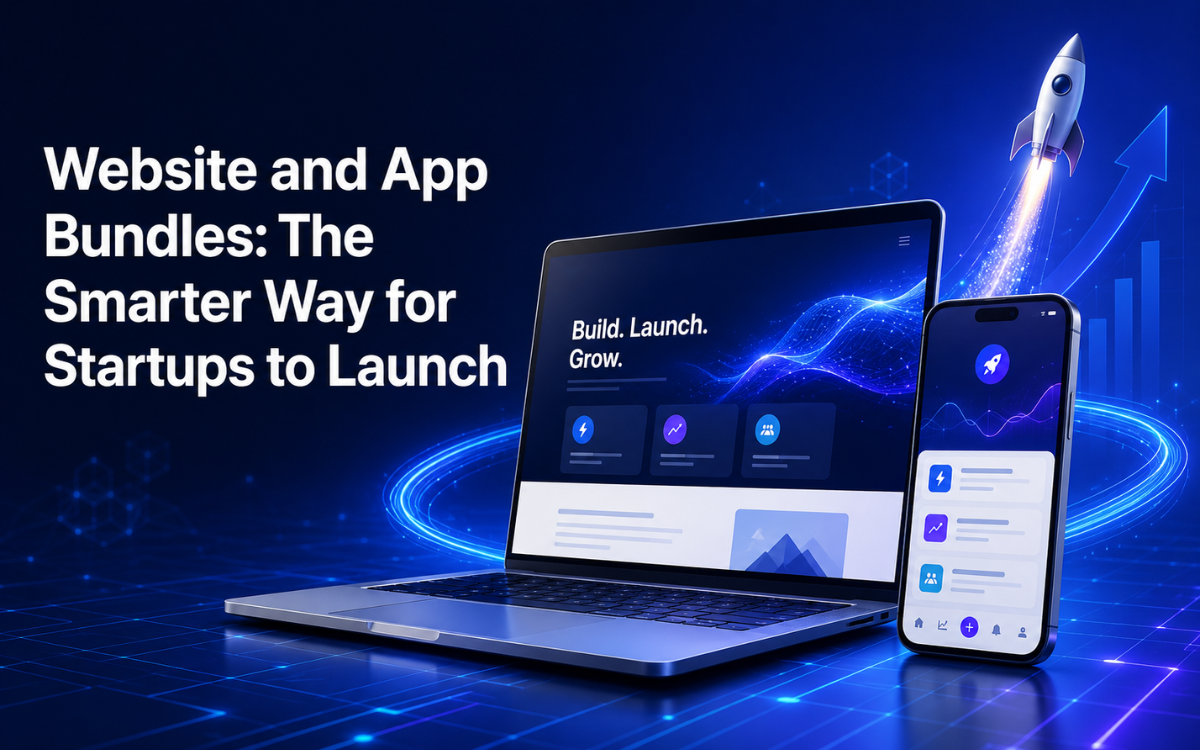
For many modern startups, the smarter approach is to plan the website and mobile app as part of the same digital ecosystem. Instead of hiring separate teams to build disconnected products, a website and app bundle can provide a consistent brand experience, shared infrastructure, synchronized data, and a more efficient development process from day one.
This doesn't mean launching every feature at once. It means creating a technology strategy where your website and app are designed to work together from the beginning.
Why "Website or App" Is Outdated Thinking
For years, businesses were encouraged to choose between building a website or developing a mobile application.
That made sense when websites and apps served completely different purposes. Today, customers often interact with businesses across multiple digital touchpoints before becoming loyal users.
A customer might discover your startup through Google, visit your website to learn about your product, download your app, create an account, and eventually become a repeat customer through the mobile experience.
The website and app are not competing products. They are different stages of the same customer journey.
Your Website Helps People Discover You
For most startups, a website remains the primary discovery and credibility platform.
Potential customers can find your business through:
- Google and other search engines
- Social media platforms
- Online advertising campaigns
- Referral links
- Email marketing
- Direct brand searches
- Content marketing
Your website can explain your product, showcase services, answer common questions, collect leads, process transactions, and establish trust.
That is why professional business website design is so important. A startup website should do more than look attractive. It should guide visitors toward meaningful actions such as:
- Signing up
- Requesting a quote
- Making a purchase
- Booking a service
- Scheduling a consultation
- Downloading an app
Your App Keeps Customers Engaged
While websites help customers discover your business, mobile apps often help retain them.
Depending on your business model, customers may use an app to:
- Place repeat orders
- Manage bookings
- Track purchases
- Receive notifications
- Access personalized content
- Communicate with support teams
- Manage account settings
- Make payments
- Participate in loyalty programs
- Access members-only features
In simple terms, the website attracts users while the app encourages ongoing engagement.
Instead of asking:
"Should we build a website or an app?"
Startups should ask:
"How should our website and app work together to support the customer journey?"
What a Website and App Bundle Actually Includes
A professional website and mobile app development strategy involves much more than simply building two separate products.
The real value comes from creating both around a shared technical and design foundation.
1. A Conversion-Focused Business Website
A startup website should be designed around business goals rather than acting as a digital brochure.
Depending on the company, it may include:
- Homepage and landing pages
- Product or service pages
- Lead-generation forms
- Online booking systems
- E-commerce functionality
- Customer account areas
- Blog or resource sections
- Pricing pages
- FAQ pages
- Contact and support features
- Analytics integrations
- SEO foundations
The goal remains the same: convert website visitors into business opportunities.
2. A Companion Mobile App
The mobile app should complement the website rather than duplicate it.
For example:
- A service business may use the website for lead generation and the app for booking management.
- An e-commerce company may use the website for product discovery and the app for repeat purchases.
- A SaaS startup may use the website for marketing while the app delivers core functionality.
Apps should focus on actions customers perform repeatedly rather than recreating every page from the website.
3. A Shared Backend
One of the biggest advantages of developing a website and app together is the ability to use a shared backend system.
Both platforms can access centralized information such as:
- Customer accounts
- Orders
- Bookings
- Products
- Payments
- User preferences
- Content
- Notifications
- Customer activity
This creates a more seamless experience while reducing duplicate development work.
4. A Unified Design System
Customers should instantly recognize your brand whether they are using your website or your app.
A shared design system can define:
- Colors
- Typography
- Buttons
- Icons
- Forms
- Navigation patterns
- Spacing
- Visual hierarchy
- Brand elements
- Interaction styles
For startups, consistency builds trust and creates a stronger professional identity.
Why Website and App Development for Startups Should Be Planned Together
Startups operate with limited budgets, limited time, and limited development resources.
A combined development strategy can deliver several advantages.
Avoid Duplicate Development
When websites and apps are developed separately, teams often rebuild similar functionality multiple times.
Examples include:
- User authentication
- Customer profiles
- APIs
- Databases
- Payment systems
- Admin dashboards
- Analytics integrations
- Notification systems
Planning both platforms together helps eliminate unnecessary duplication.
Reduce Integration Problems
Connecting independent systems later can become expensive and complicated.
Common issues include:
- Different database structures
- Incompatible APIs
- Authentication conflicts
- Payment processing challenges
- Content synchronization problems
- Third-party integration issues
These challenges are much easier to solve when both platforms are planned as one ecosystem.
Maintain Brand Consistency
Customers expect a consistent experience across every digital touchpoint.
If your website and app look completely different, it creates unnecessary friction and can weaken trust.
A unified design approach ensures customers always feel like they are interacting with the same company.
Simplify Future Growth
Startups evolve rapidly.
Future additions may include:
- Subscription plans
- Loyalty programs
- Customer dashboards
- AI-powered features
- Push notifications
- Staff portals
- Referral systems
- Additional payment options
A shared architecture makes these enhancements easier to implement later.
Is Building Both a Website and App More Expensive?
At first glance, developing two products may appear more expensive than building one.
However, the better comparison is:
Two coordinated products vs. two separate products built independently.
If your startup will eventually need both a website and a mobile app, planning them together can reduce duplicated effort and avoid costly redevelopment later.
For example, many startups launch a website and then decide to build an app several months later.
At that point, developers often need to retrofit:
- Authentication systems
- APIs
- Databases
- Payment infrastructure
- Customer accounts
If those systems were not originally designed with mobile integration in mind, significant redevelopment may be required.
Website First or App First? A Better MVP Strategy
Planning both platforms does not mean launching every feature immediately.
In fact, overbuilding an MVP can slow progress.
A smarter approach often looks like this:
Phase 1: Launch Core Experiences
Release the essential website and app functionality needed to validate the idea.
Phase 2: Gather Real User Feedback
Observe customer behavior and identify which features provide the most value.
Phase 3: Optimize Based on Data
Use actual user insights rather than assumptions to prioritize development.
Phase 4: Scale Strategically
Expand website and app functionality according to customer demand.
This approach provides a unified direction without forcing startups to build everything upfront.
When a Website and App Bundle Makes the Most Sense
A combined website and app strategy is particularly valuable for businesses that depend on recurring customer interactions.
E-Commerce Startups
The website attracts traffic through search while the app simplifies repeat purchases.
Booking and Service Businesses
Customers discover services online and manage bookings through the mobile app.
Marketplaces
The website supports acquisition while the app improves the experience for active users.
Food and Delivery Businesses
Customers find products through the website and place repeat orders through the app.
Subscription Businesses
The website converts new customers while the app supports ongoing engagement.
SaaS Platforms
The website handles marketing, SEO, and documentation while the app delivers product functionality.
What to Look for in a Website and Mobile App Development Company
Choosing the right development partner is just as important as choosing the right technology strategy.
Look for Full-Stack Expertise
Your development partner should understand:
- Frontend development
- Mobile development
- Backend architecture
- APIs
- Databases
- Authentication
- Cloud infrastructure
- Integrations
- Analytics
- Security
- Deployment
This helps ensure both platforms are developed as part of a connected ecosystem.
Ask About Their Process
A reliable development company should be able to explain:
- Business discovery
- Product strategy
- User experience planning
- Technical architecture
- UI/UX design
- Website development
- Mobile app development
- Backend development
- API integration
- Quality assurance
- Deployment
- Ongoing support
A clear process is often a stronger indicator than technical buzzwords.
Review Relevant Case Studies
Ask potential partners:
"Can you show examples where you built the website and mobile app as one connected system?"
Look for evidence of:
- Shared infrastructure
- Consistent user experience
- Cross-platform data management
- Scalability planning
- Long-term product thinking
The Importance of a Shared Product Vision
Technology should support business strategy rather than operate separately from it.
Before development begins, your team should answer:
- Who is the target customer?
- How do customers discover the business?
- What drives conversions?
- What actions do customers repeat?
- Which features belong on the website?
- Which features belong in the app?
- What information should be shared?
- What should be included in the MVP?
- What can be added later?
Answering these questions early helps avoid unnecessary complexity and keeps development aligned with business goals.
Website and App Development Should Be One System
The biggest mistake startups make is treating their website and app as completely separate products.
Customers don't think about architecture.
They think about the brand experience.
If they discover you through Google, they expect the website to make sense.
If they download your app, they expect it to feel familiar.
If they create an account, they expect their information to remain consistent everywhere.
If they make a purchase or booking, they expect accurate information across all platforms.
A unified digital ecosystem is designed to deliver exactly that experience.
Why SpeckPro Takes a Unified Approach
At SpeckPro, website and app development is approached as one connected system rather than two unrelated projects.
From the initial strategy phase, the focus is on:
- Understanding the business model
- Mapping the customer journey
- Defining the right technical architecture
- Creating a consistent user experience
- Building scalable infrastructure
The goal is not simply to launch a website and an app.
The goal is to create a foundation that supports growth without unnecessary rebuilding.
Build Smarter, Not Bigger
The traditional approach was simple: launch a website today and build an app later.
For many startups, that approach can lead to technical debt, duplicated work, inconsistent branding, and costly integrations.
A smarter strategy is to think about the entire digital ecosystem from the beginning.
That does not mean building everything at once.
It means making strategic decisions early so your website, mobile app, backend, data, and brand can work together as your business grows.
If you're planning a startup launch, consider a website and app bundle rather than treating web and mobile as competing options.
The goal isn't to build more.
It's to build smarter.
And when choosing a website and mobile app development company, look for a partner that understands how to deliver both as one connected product rather than two isolated projects.
Frequently Asked Questions
Should a startup build a website or an app first?
The answer depends on your business model, but many startups benefit from planning both together. The website often supports discovery and lead generation, while the app supports customer retention and repeat engagement.
What is included in a website and app bundle?
A typical bundle may include a business website, mobile application, shared backend infrastructure, unified design system, API integrations, user authentication, analytics, and ongoing support.
Is it cheaper to develop a website and app together?
In many cases, yes. Building both around a shared architecture can reduce duplicated development work, simplify integrations, and lower future redevelopment costs.
Why is a shared backend important?
A shared backend allows both the website and app to access the same customer accounts, orders, bookings, content, and business data. This improves efficiency and creates a seamless user experience.
What types of startups benefit most from a website and app bundle?
E-commerce businesses, marketplaces, service companies, SaaS platforms, subscription services, food delivery businesses, and booking-based startups often benefit the most because customers interact with them repeatedly across multiple digital channels.
Interested in building a similar app? See our mobile app development services.
SpeckPro Editorial Team
Web DevelopmentNotes from the SpeckPro team on building, improving, and scaling digital products.